

Educational Toys Every Parent Should Buy

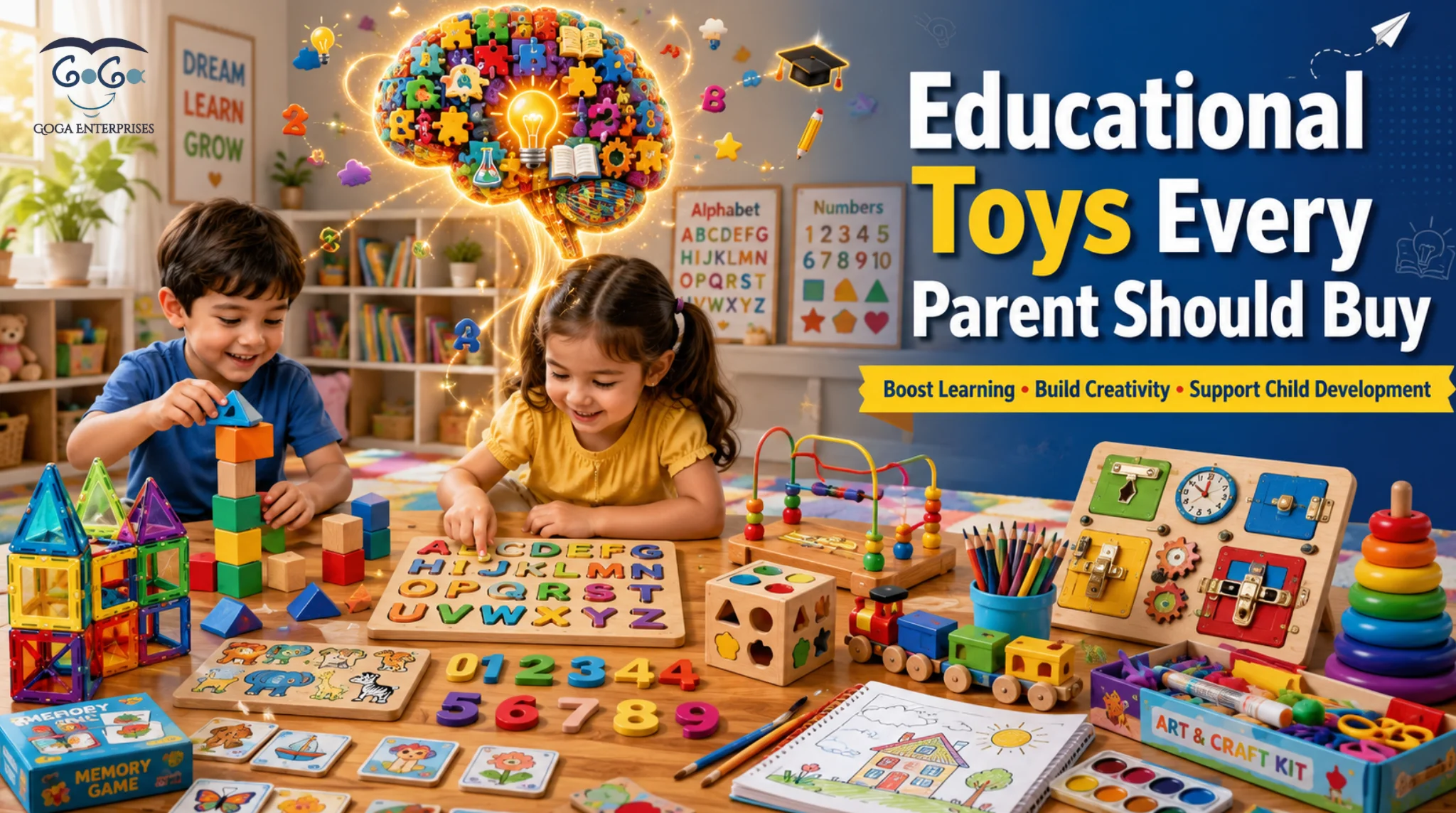
Table of Contents
Every parent wants to give their child the best possible start in life. While good nutrition, quality education, and a loving environment are essential, choosing the right toys also plays a significant role in a child’s overall development. Educational toys are more than just playthings—they are valuable learning tools that help children develop essential skills while making learning enjoyable.
In today’s digital age, children are surrounded by smartphones, tablets, and television screens. Although technology can be useful, excessive screen time often limits physical activity, creativity, and hands-on learning. This is why educational toys have become increasingly important for modern families.
The Educational Toys Every Parent Should Buy are designed to encourage curiosity, imagination, critical thinking, and independent learning. Whether it’s a wooden puzzle, building blocks, STEM kit, pretend play set, or art and craft kit, each toy contributes to different aspects of child development.
By investing in educational toys, parents can create a fun learning environment where children naturally develop cognitive abilities, motor skills, communication, and confidence while enjoying every moment of play.
In this guide, we’ll explore why educational toys are important, the best options for different age groups, and how to choose toys that support your child’s long-term development.
Why Educational Toys Are Important
Children learn best through play. During playtime, they explore new ideas, experiment with different solutions, and develop important life skills without even realizing they are learning.
Educational toys encourage children to become active participants in their own learning rather than passive observers.
Some of the major benefits include:
- Improves brain development
- Builds creativity and imagination
- Strengthens memory
- Develops problem-solving skills
- Improves concentration
- Enhances communication skills
- Supports emotional growth
- Encourages independent thinking
Unlike ordinary toys, educational toys provide meaningful experiences that continue to benefit children as they grow.
How Educational Toys Support Child Development
Every educational toy helps develop one or more important skills.
Cognitive Development
Children learn to observe, compare, classify, count, and solve problems.
Physical Development
Building blocks, shape sorters, and construction toys improve hand-eye coordination and fine motor skills.
Social Development
Board games and pretend play sets teach sharing, teamwork, and communication.
Emotional Development
Creative play helps children express emotions, build confidence, and develop patience.
Language Development
Alphabet puzzles, flashcards, and storytelling toys improve vocabulary and communication skills.
Educational Toys Every Parent Should Buy
1. Wooden Alphabet Puzzles
Alphabet puzzles are one of the first educational toys every child should have.
They help children:
- Recognize letters
- Learn phonics
- Improve vocabulary
- Develop hand-eye coordination
- Build early reading skills
Bright colors and interactive pieces keep children engaged while making learning enjoyable.
2. Number Puzzle Sets
Mathematics becomes much easier when children learn through play.
Number puzzles help children understand:
- Counting
- Number recognition
- Sequencing
- Basic addition
- Problem-solving
These toys build a strong foundation for future mathematical learning.
3. Building Blocks
Building blocks remain one of the most recommended educational toys for children of all ages.
Children can build:
- Towers
- Bridges
- Houses
- Vehicles
- Castles
Benefits
- Encourages creativity
- Improves spatial awareness
- Develops fine motor skills
- Builds logical thinking
- Increases confidence
Since there is no single correct way to build, children enjoy unlimited creative possibilities.
4. Shape Sorter Toys
Shape sorters are perfect for toddlers beginning to recognize colors and shapes.
These toys improve:
- Shape recognition
- Color identification
- Finger strength
- Coordination
- Logical thinking
They also introduce children to basic problem-solving concepts.
5. Pretend Play Sets
Role-playing encourages children to use their imagination while learning about the real world.
Popular pretend play toys include:
- Kitchen Sets
- Doctor Kits
- Tool Sets
- Cash Register Toys
- Doll Houses
These toys improve:
- Creativity
- Language skills
- Social interaction
- Emotional intelligence
- Communication
Children also gain confidence by acting out everyday situations.
Choosing Toys Based on Your Child’s Age
Selecting toys according to your child’s developmental stage ensures they remain both challenging and enjoyable.
1–2 Years
Recommended toys:
- Shape Sorters
- Soft Blocks
- Stacking Rings
- Musical Toys
- Activity Cubes
3–5 Years
Ideal toys:
- Alphabet Puzzles
- Number Puzzles
- Building Blocks
- Animal Puzzles
- Pretend Play Sets
6–8 Years
Recommended toys:
- STEM Kits
- Magnetic Tiles
- Board Games
- Science Kits
- Art & Craft Sets
6. STEM Toys
STEM (Science, Technology, Engineering, and Mathematics) toys help children learn through exploration and experimentation. These toys encourage kids to ask questions, solve problems, and discover how things work while having fun.
Popular STEM toys include:
- Robotics Kits
- Magnetic Building Tiles
- Engineering Construction Sets
- Coding Games
- Science Experiment Kits
Benefits
- Develops critical thinking
- Improves logical reasoning
- Encourages innovation
- Enhances problem-solving skills
- Builds confidence through hands-on learning
STEM toys prepare children for future learning by making science and technology exciting from an early age.
7. Art and Craft Kits
Art and craft activities give children the freedom to express themselves creatively. Whether they are drawing, painting, cutting, or creating DIY projects, every activity supports imagination and fine motor development.
Popular art supplies include:
- Crayons
- Colored Pencils
- Watercolors
- Sketch Pens
- Clay Modeling Kits
- DIY Craft Boxes
- Coloring Books
Benefits
- Encourages creativity
- Improves hand-eye coordination
- Develops patience
- Boosts self-confidence
- Enhances concentration
Creative activities also help children express emotions in a healthy and enjoyable way.
8. Memory Games
Memory games are excellent educational toys that strengthen a child’s brain while making learning enjoyable.
Examples include:
- Matching Card Games
- Picture Memory Games
- Alphabet Matching
- Number Matching
- Animal Memory Cards
Benefits
- Improves concentration
- Enhances short-term memory
- Develops observation skills
- Increases attention span
- Strengthens cognitive abilities
These games can also become enjoyable family activities.
9. Educational Board Games
Board games combine fun with valuable life lessons. They teach children how to think strategically, follow rules, and cooperate with others.
Popular educational board games include:
- Chess
- Ludo
- Dominoes
- Snakes and Ladders
- Word Games
- Strategy Games
Benefits
- Develops logical thinking
- Encourages teamwork
- Improves patience
- Enhances decision-making skills
- Builds communication skills
Board games also create wonderful opportunities for family bonding.
10. Montessori Learning Toys
Montessori toys are specially designed to encourage independent learning through hands-on experiences.
Examples include:
- Wooden Learning Boards
- Busy Boards
- Counting Beads
- Sorting Trays
- Practical Life Activity Toys
Benefits
- Encourages self-learning
- Improves concentration
- Develops fine motor skills
- Builds confidence
- Promotes problem-solving
These toys help children become more independent while learning everyday life skills.
Benefits of Educational Toys
Parents often wonder whether educational toys are worth the investment. The answer is yes. High-quality educational toys provide long-term developmental benefits that support children’s success both inside and outside the classroom.
Some of the biggest benefits include:
Boost Brain Development
Educational toys encourage children to think, analyze, and solve problems, strengthening brain development during the early years.
Improve Creativity and Imagination
Open-ended toys inspire children to invent stories, build structures, and explore new ideas without limitations.
Develop Fine Motor Skills
Activities such as stacking blocks, fitting puzzle pieces, and drawing improve finger strength and hand-eye coordination.
Strengthen Communication Skills
Pretend play and storytelling encourage children to express ideas, ask questions, and interact confidently with others.
Encourage Independent Learning
Educational toys motivate children to explore, experiment, and discover solutions on their own.
Build Confidence
Every completed puzzle, successful construction, or creative artwork gives children a sense of achievement and boosts their self-esteem.
Tips for Parents When Buying Educational Toys
Choosing the right educational toy can make a significant difference in your child’s learning journey.
1. Choose Age-Appropriate Toys
Always check the recommended age range to ensure the toy matches your child’s developmental stage.
2. Focus on Learning Value
Choose toys that teach useful skills such as:
- Creativity
- Problem-solving
- Communication
- Logical thinking
- Motor skills
- Memory
3. Prioritize Safety
Select toys that are:
- Made from non-toxic materials
- Free from sharp edges
- Durable and child-safe
- Easy to clean
4. Prefer Open-Ended Toys
Open-ended toys encourage children to use their imagination instead of following fixed instructions.
Examples include:
- Building Blocks
- Magnetic Tiles
- Clay Sets
- Wooden Construction Toys
5. Rotate Toys Regularly
Instead of purchasing new toys every month, rotate existing toys every few weeks to keep children interested and engaged.
6. Limit Screen Time
Educational toys are most effective when they replace excessive mobile and tablet use. Encourage children to spend more time exploring, building, and creating.
Educational Toys vs Regular Toys
| Educational Toys | Regular Toys |
| Promote active learning | Mainly entertainment-focused |
| Develop cognitive skills | Limited educational value |
| Encourage creativity | Often repetitive play |
| Improve problem-solving | Less focus on learning |
| Support motor skill development | May not build developmental skills |
| Encourage independent thinking | Usually fixed play patterns |
Educational toys provide long-term benefits by combining fun with meaningful learning experiences.
Why Every Parent Should Invest in Educational Toys
The early years of a child’s life are the foundation for future learning. Educational toys make this learning process enjoyable and effective. They encourage curiosity, improve confidence, and develop skills that children will use throughout their lives.
By choosing the right educational toys, parents are not simply buying playthings—they are investing in their child’s future success.
Common Mistakes Parents Make When Buying Educational Toys
Choosing educational toys is an investment in your child’s future. However, many parents unknowingly make mistakes that reduce the learning value of these toys. Understanding these common mistakes can help you make better purchasing decisions.
1. Buying Toys Only Because They Are Popular
Many toys become popular through advertisements or social media, but popularity doesn’t always mean educational value.
Instead, choose toys based on:
- Your child’s age
- Interests
- Developmental stage
- Learning goals
A toy that matches your child’s abilities will keep them engaged for much longer.
2. Ignoring the Recommended Age
Every educational toy is designed for a specific developmental stage.
A toy that is too simple may become boring, while one that is too difficult may frustrate your child.
Always check the recommended age before purchasing.
3. Choosing Entertainment Over Learning
Flashing lights and loud sounds may attract children initially, but they don’t always encourage meaningful learning.
Instead, choose toys that inspire:
- Creativity
- Problem-solving
- Independent thinking
- Hands-on exploration
- Communication
Educational value should always come before temporary entertainment.
4. Buying Too Many Toys
A room full of toys does not guarantee better learning.
Too many choices can overwhelm children and reduce their attention span.
A better approach is to:
- Keep a limited number of toys available.
- Rotate toys every 2–3 weeks.
- Store unused toys safely.
This keeps playtime fresh and exciting without constantly buying new toys.
5. Ignoring Safety Standards
Safety should always be your top priority.
Choose toys that are:
- Made from non-toxic materials
- BPA-free (where applicable)
- Smooth-edged
- Durable
- Easy to clean
- Appropriate for your child’s age
Always inspect toys regularly for broken or loose parts.
How to Choose the Best Educational Toys
Understanding Educational Toys Every Parent Should Buy also means knowing how to select toys that truly support your child’s growth.
Consider Your Child’s Interests
Children learn faster when they enjoy what they’re doing.
For example:
- If your child enjoys building, choose building blocks or magnetic tiles.
- If they love drawing, choose art and craft kits.
- If they enjoy solving challenges, puzzles and STEM kits are excellent choices.
- If they love storytelling, pretend play toys are ideal.
Choosing toys based on your child’s interests keeps them motivated and engaged.
Select Open-Ended Toys
Open-ended toys allow children to create something new every time they play.
Examples include:
- Wooden Blocks
- Magnetic Tiles
- Construction Sets
- Clay Modeling Kits
- Art Supplies
These toys encourage imagination, creativity, and independent thinking without limiting children to one fixed outcome.
Encourage Learning Through Play
The best educational toys teach valuable life skills while making learning enjoyable.
Look for toys that help develop:
- Brain development
- Creativity
- Problem-solving
- Communication
- Fine motor skills
- Memory
- Logical thinking
- Social skills
When children enjoy learning, they naturally become more curious and confident.
Choose Quality Over Quantity
A few high-quality educational toys are far more valuable than many low-quality toys.
Good-quality toys:
- Last longer
- Are safer
- Provide better learning experiences
- Offer greater value over time
Invest in durable toys that can be used repeatedly in different ways.
Make Playtime Interactive
Educational toys become even more effective when parents participate.
Activities such as:
- Solving puzzles together
- Building towers with blocks
- Playing board games
- Reading storybooks
- Creating art projects
help strengthen family bonds while improving communication and teamwork.
Educational Toys vs Excessive Screen Time
Today’s children spend more time on digital devices than ever before. While technology can support learning in moderation, excessive screen time may reduce opportunities for active play and social interaction.
| Educational Toys | Excessive Screen Time |
| Encourages active learning | Passive entertainment |
| Builds creativity | Limited creativity |
| Improves problem-solving | Instant gratification |
| Develops motor skills | Minimal physical activity |
| Encourages communication | Reduced face-to-face interaction |
| Promotes teamwork | Often individual activity |
| Supports brain development | May reduce attention span with overuse |
Replacing some daily screen time with educational play helps children develop healthier habits and stronger life skills.
Why Educational Toys Are a Smart Investment
Educational toys provide benefits that go beyond childhood. They help children build essential skills that support academic success, social relationships, and future careers.
Some long-term benefits include:
- Stronger critical thinking
- Better creativity
- Improved communication
- Greater confidence
- Enhanced problem-solving abilities
- Better teamwork and collaboration
- Lifelong curiosity and love of learning
The right educational toys can positively influence a child’s development for years to come.
Final Thoughts
Choosing the Educational Toys Every Parent Should Buy is one of the best decisions you can make for your child’s future. Educational toys transform ordinary playtime into meaningful learning experiences that support intellectual, physical, emotional, and social development.
Whether it’s a simple alphabet puzzle, a colorful building block set, a STEM kit, or a pretend play toy, each activity encourages children to think, create, solve problems, and express themselves with confidence.
Parents don’t need to buy every toy available. Instead, focus on selecting age-appropriate, safe, durable, and engaging toys that match your child’s interests and developmental needs. Combined with quality family time and balanced screen use, educational toys can lay the foundation for lifelong learning and success.
Remember, every moment spent learning through play is an investment in your child’s brighter future.
Frequently Asked Questions (FAQs)
1. What are the best educational toys every parent should buy?
Some of the best educational toys include alphabet puzzles, number puzzles, building blocks, shape sorters, STEM kits, Montessori toys, art and craft kits, memory games, board games, and pretend play sets. These toys support learning while making playtime enjoyable.
2. How do educational toys help children learn?
Educational toys improve cognitive development, creativity, fine motor skills, language abilities, problem-solving, memory, and social skills. They encourage children to learn through hands-on experiences rather than passive observation.
3. At what age should children start using educational toys?
Educational toys can be introduced from infancy with age-appropriate sensory toys. As children grow, they can progress to shape sorters, puzzles, building blocks, pretend play sets, and STEM toys that match their developmental stage.
4. Are educational toys better than regular toys?
Educational toys are designed to combine fun with learning. They help children develop essential skills such as critical thinking, creativity, communication, and motor coordination, making them more beneficial for overall development than toys focused only on entertainment.
5. How can parents choose the right educational toys?
Parents should look for toys that are age-appropriate, safe, durable, engaging, and aligned with their child’s interests. Choosing toys that encourage creativity, problem-solving, and active learning will provide the greatest long-term benefits.
Conclusion
Educational toys are much more than gifts—they are powerful tools that inspire curiosity, creativity, and lifelong learning. By choosing the Educational Toys Every Parent Should Buy, you give your child opportunities to explore, discover, and develop essential skills in a fun and engaging way. Every puzzle solved, every tower built, and every imaginative story created helps shape a confident, capable, and curious learner ready to embrace the future.
Foloow us on


