

How Toys Help in Child Development: A Complete Parent’s Guide

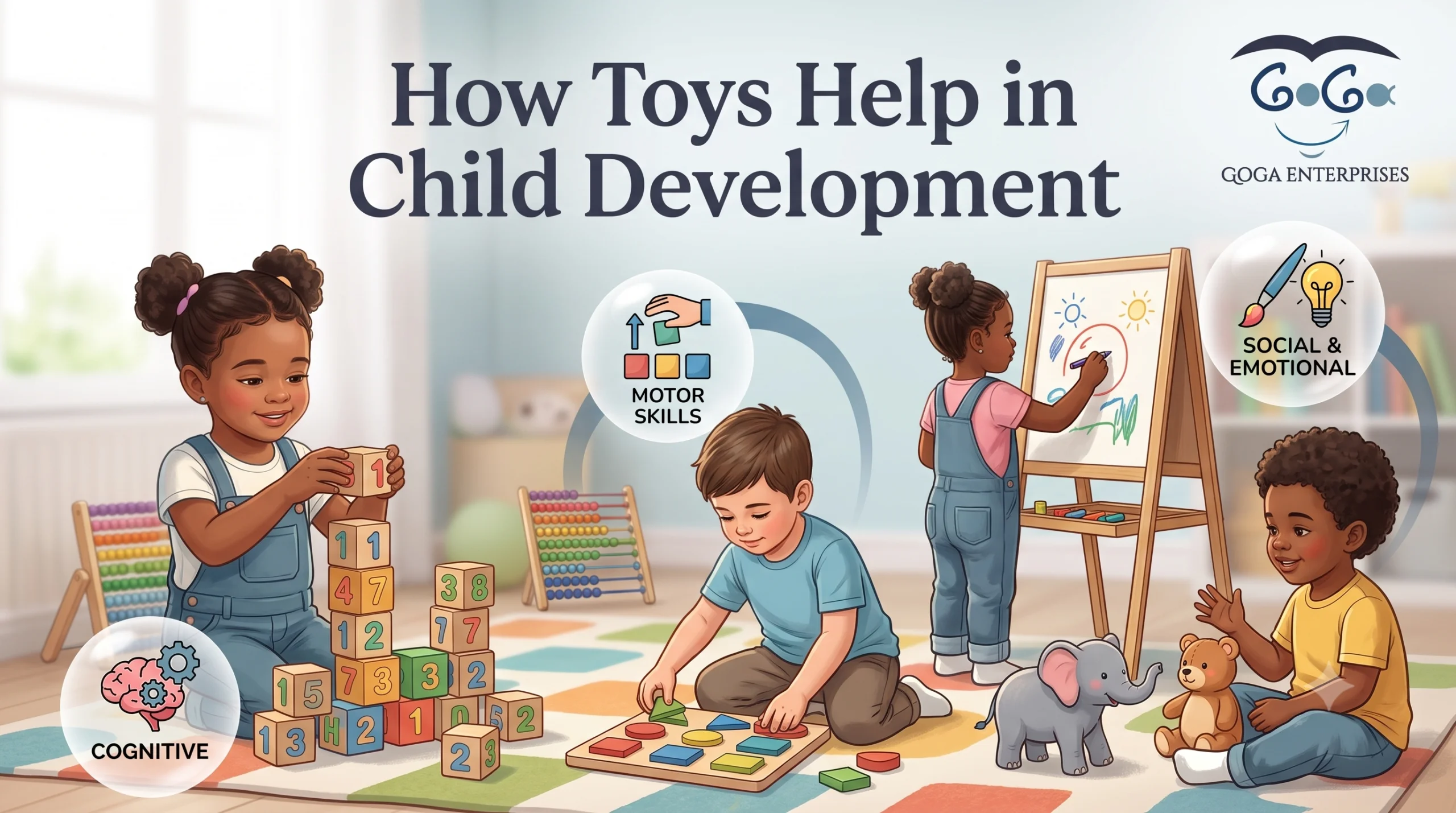
Table of Contents
Parents often think toys are simply a source of entertainment for children. While toys certainly make playtime enjoyable, they also play a much bigger role in a child’s physical, mental, emotional, and social development. Every block stacked, every puzzle solved, and every pretend game played helps children learn essential life skills that support their growth.
In today’s digital world, children are spending more time on mobile phones and tablets than ever before. Because of this, educational toys have become increasingly important. Instead of passive screen time, toys encourage active learning, creativity, imagination, and hands-on experiences that help children understand the world around them.
Understanding How Toys Help in Child Development allows parents to choose toys that are not only fun but also educational. The right toys can improve problem-solving abilities, strengthen motor skills, boost confidence, encourage communication, and support healthy brain development.
In this comprehensive guide, we’ll explore the different ways toys contribute to child development and how parents can choose the best toys for every stage of childhood.
Why Toys Are Important for Child Development
Children learn best through play. During playtime, they naturally explore, experiment, make mistakes, and discover new ideas. Toys provide opportunities for children to practice important skills while enjoying themselves.
Educational toys stimulate curiosity and encourage children to think independently. Whether they are solving puzzles, building towers, drawing pictures, or pretending to be doctors or chefs, every activity contributes to their overall development.
Some of the biggest benefits include:
- Improves brain development
- Builds creativity and imagination
- Develops fine and gross motor skills
- Enhances communication abilities
- Encourages emotional intelligence
- Improves concentration
- Supports independent thinking
- Increases confidence
Play is not just entertainment—it is one of the most effective learning methods during childhood.
How Toys Help in Child Development at Different Stages
Children’s developmental needs change as they grow. Choosing age-appropriate toys ensures they continue learning new skills at every stage.
Infants (0–12 Months)
During the first year of life, babies begin exploring the world through their senses.
Suitable toys include:
- Soft rattles
- Activity mats
- Musical toys
- Sensory balls
- Soft blocks
These toys help develop:
- Vision
- Hearing
- Touch
- Hand-eye coordination
- Muscle control
Simple toys that produce sounds or bright colors stimulate early brain development.
Toddlers (1–3 Years)
Toddlers become more active and curious. They enjoy touching, stacking, sorting, and exploring.
Recommended toys include:
- Shape sorters
- Stacking rings
- Wooden puzzles
- Push-and-pull toys
- Building blocks
These toys improve:
- Fine motor skills
- Balance
- Coordination
- Problem-solving
- Color recognition
- Shape recognition
Toddlers also begin understanding cause and effect through interactive play.
Preschoolers (3–5 Years)
Preschool children learn rapidly during this stage. Their imagination grows, and they begin asking questions about everything around them.
Ideal toys include:
- Alphabet puzzles
- Number puzzles
- Animal puzzles
- Building blocks
- Pretend play sets
- Art and craft kits
These educational toys help children develop:
- Language skills
- Creativity
- Logical thinking
- Memory
- Concentration
- Early mathematics
Pretend play also helps children express emotions and understand different social situations.
Brain Development Through Educational Toys
One of the biggest reasons parents invest in educational toys is because they actively support brain development.
When children solve puzzles, stack blocks, or create something new, multiple areas of the brain work together simultaneously. This strengthens neural connections and improves learning abilities.
Educational toys help improve:
Memory
Matching games and puzzles encourage children to remember patterns, colors, and shapes.
Attention Span
Completing activities requires patience and focus, gradually improving concentration.
Logical Thinking
Construction toys and puzzles teach children how to analyze situations before making decisions.
Decision-Making
Children constantly make choices while playing, helping them develop independent thinking skills.
Problem-Solving Skills
Every challenge during play encourages children to think creatively and discover solutions on their own.
These experiences build a strong foundation for future academic success.
Cognitive Development and Learning Through Play
Cognitive development refers to how children think, understand, remember, and learn.
Educational toys stimulate cognitive growth by encouraging children to:
- Observe
- Compare
- Sort
- Match
- Count
- Build
- Experiment
For example:
A simple wooden alphabet puzzle teaches:
- Letter recognition
- Vocabulary
- Hand-eye coordination
- Memory
- Fine motor skills
Similarly, building blocks teach children about balance, size, shape, and basic engineering concepts without making learning feel like school.
As children solve increasingly difficult challenges, their confidence also grows.
Physical Development Through Toys
One of the most overlooked benefits of toys is their ability to improve a child’s physical development. Active play encourages children to move, stretch, balance, and coordinate their bodies while having fun.
Unlike screen-based entertainment, physical toys require children to interact with their environment, making them stronger and more active.
Benefits of Physical Play
- Improves muscle strength
- Enhances body coordination
- Develops balance
- Encourages healthy physical activity
- Supports overall fitness
Some of the best toys for physical development include:
- Ride-on cars
- Push-and-pull toys
- Balls
- Indoor sports toys
- Balance boards
- Trampolines (with supervision)
- Hopping toys
Regular physical play also helps children maintain a healthy lifestyle from an early age.
How Toys Improve Fine Motor Skills
Fine motor skills involve the small muscles of the hands and fingers. These skills are essential for everyday activities such as writing, drawing, buttoning clothes, and tying shoelaces.
Educational toys naturally strengthen these muscles through repeated movements.
Toys That Improve Fine Motor Skills
- Wooden puzzles
- Building blocks
- Shape sorters
- Bead threading toys
- Peg boards
- Clay and dough kits
- Stacking rings
These activities encourage children to:
- Pick up small objects
- Place pieces correctly
- Grip and release objects
- Rotate and twist items
- Improve finger control
Fine motor development prepares children for success in school and daily life.
Gross Motor Skills Development
Gross motor skills involve larger muscle groups responsible for movement.
These skills include:
- Walking
- Running
- Jumping
- Climbing
- Throwing
- Catching
Indoor and outdoor toys encourage children to move naturally while improving coordination.
Recommended toys include:
- Ride-on vehicles
- Scooters
- Soft balls
- Indoor bowling sets
- Balance bikes
- Activity tunnels
Children who regularly engage in active play often develop better posture, coordination, and physical confidence.
How Toys Help in Child Development by Improving Social Skills
One of the biggest advantages of group play is social learning.
When children play together, they naturally learn how to communicate, cooperate, negotiate, and solve conflicts.
These experiences prepare them for school and future relationships.
Social Skills Developed Through Toys
- Sharing
- Teamwork
- Communication
- Respect
- Patience
- Leadership
- Cooperation
Excellent social play toys include:
- Board games
- Kitchen play sets
- Doctor kits
- Doll houses
- Building blocks
- Team puzzles
Playing with siblings and friends teaches children valuable life lessons that cannot be learned through mobile screens.
Emotional Development Through Play
Children experience many emotions while playing.
Sometimes they win.
Sometimes they lose.
Sometimes their tower falls.
Sometimes they solve a difficult puzzle.
These situations teach emotional regulation naturally.
Educational toys help children:
- Handle frustration
- Build patience
- Increase confidence
- Express emotions
- Become independent
- Develop resilience
Pretend play toys are especially effective because children act out real-life situations and learn empathy.
Examples include:
- Doctor Set
- Kitchen Set
- Doll House
- Puppet Toys
- Action Figures
Role-playing helps children understand feelings, relationships, and responsibilities.
Language Development Through Educational Toys
Communication skills begin developing long before children start school.
Educational toys encourage children to speak, listen, ask questions, and learn new vocabulary.
Some of the best language-learning toys include:
- Alphabet puzzles
- Flash cards
- Storytelling cards
- Talking books
- Word-building games
- Magnetic letters
These toys improve:
- Vocabulary
- Pronunciation
- Sentence formation
- Listening skills
- Reading readiness
Parents can make playtime even more educational by asking simple questions while children play.
For example:
- “What color is this?”
- “Can you find the letter A?”
- “How many animals do you see?”
- “What happens if we build a taller tower?”
Simple conversations during play significantly improve language development.
Creativity and Imagination
Creativity is one of the most valuable skills children can develop.
Open-ended toys allow children to create something different every time they play.
Unlike electronic games with fixed outcomes, educational toys encourage imagination.
Examples include:
- Building blocks
- Magnetic tiles
- Clay modeling kits
- Drawing sets
- Painting kits
- LEGO-style construction toys
Creative play helps children:
- Think independently
- Solve problems creatively
- Express ideas
- Build confidence
- Develop innovation skills
Many successful inventors, artists, and engineers developed their creativity through imaginative play during childhood.
Best Educational Toys for Different Development Areas
| Development Area | Recommended Toys |
| Brain Development | Wooden Puzzles, Memory Games |
| Fine Motor Skills | Shape Sorters, Building Blocks |
| Gross Motor Skills | Ride-On Toys, Balls, Scooters |
| Creativity | Art & Craft Kits, Building Blocks |
| Language Skills | Alphabet Puzzles, Flash Cards |
| Problem Solving | Jigsaw Puzzles, STEM Toys |
| Social Skills | Board Games, Pretend Play Sets |
| Emotional Development | Doll Houses, Role Play Toys |
Choosing a variety of toys ensures balanced development across multiple areas rather than focusing on just one skill.
Tips for Parents to Maximize Learning Through Toys
Buying educational toys is only the first step. Parents play an equally important role in making playtime meaningful.
Here are some practical tips:
1. Choose Age-Appropriate Toys
Select toys that match your child’s age, interests, and developmental stage.
2. Limit Screen Time
Replace excessive mobile use with engaging educational toys and family play sessions.
3. Play Together
Children learn more when parents actively participate in games and activities.
4. Rotate Toys Regularly
Instead of buying new toys frequently, rotate existing ones every few weeks to keep children interested.
5. Encourage Open-Ended Play
Allow children to explore toys freely without giving too many instructions. This boosts creativity and independent thinking.
6. Praise Effort, Not Just Results
Celebrate your child’s attempts, creativity, and persistence rather than focusing only on completing a task correctly.
7. Create a Safe Play Environment
Ensure the play area is clean, organized, and free from hazards so children can explore confidently.
Common Mistakes Parents Make When Buying Toys
Many parents believe that expensive toys are always better. However, the educational value of a toy is far more important than its price. Choosing the wrong toys can reduce a child’s interest and limit their learning opportunities.
Here are some common mistakes to avoid:
1. Buying Toys Only Because They Are Trendy
Popular toys are not always educational. Instead of following trends, choose toys that match your child’s age, interests, and developmental needs.
2. Choosing Toys That Are Too Advanced
A toy that is too difficult may frustrate a child, while one that is too easy can become boring. Always check the recommended age group before purchasing.
3. Ignoring Safety Standards
Safety should always come first.
Choose toys that are:
- Made from non-toxic materials
- Free from sharp edges
- Durable and well-built
- Certified for child safety
- Easy to clean and maintain
4. Buying Too Many Toys at Once
Having too many toys can overwhelm children and reduce their creativity. Instead, keep a limited selection available and rotate toys every few weeks to maintain excitement.
5. Depending Only on Electronic Toys
Electronic toys can be entertaining, but children also need hands-on learning experiences. Balance interactive electronic toys with puzzles, building blocks, pretend play sets, and art activities.
How to Choose the Best Educational Toys for Your Child
Understanding How Toys Help in Child Development makes it easier to select toys that support learning while keeping playtime fun.
Consider Your Child’s Interests
Children are naturally more engaged when they play with toys they genuinely enjoy.
For example:
- If your child enjoys building, choose construction blocks or magnetic tiles.
- If they love drawing, provide art and craft kits.
- If they enjoy solving challenges, choose puzzles or memory games.
- If they like storytelling, role-play toys such as kitchen sets or doctor kits are ideal.
Choose Open-Ended Toys
Open-ended toys allow children to create something different every time they play.
Examples include:
- Wooden Blocks
- Building Sets
- Magnetic Tiles
- Clay Kits
- Construction Toys
These toys encourage imagination, creativity, and independent thinking.
Focus on Learning Through Play
The best educational toys combine fun with skill development.
Look for toys that improve:
- Brain Development
- Problem-Solving Skills
- Fine Motor Skills
- Communication Skills
- Creativity
- Memory
- Logical Thinking
- Social Skills
Encourage Family Playtime
Children learn even more when parents participate in their activities.
Playing together:
- Builds stronger relationships
- Improves communication
- Encourages teamwork
- Creates lasting memories
- Increases children’s confidence
Simple activities like solving puzzles or playing board games together can have a lasting positive impact.
Why Educational Toys Are Better Than Excessive Screen Time
In today’s digital world, screens are almost impossible to avoid. However, educational toys provide experiences that mobile phones and tablets cannot.
| Educational Toys | Excessive Screen Time |
| Encourages active learning | Encourages passive entertainment |
| Improves creativity | Limited creativity |
| Develops motor skills | Minimal physical movement |
| Supports social interaction | Often isolates children |
| Builds patience | Encourages instant gratification |
| Improves communication | Less face-to-face interaction |
| Enhances imagination | Fixed digital content |
By replacing a portion of daily screen time with educational play, parents can support healthier physical, mental, and emotional development.
Final Thoughts
Understanding How Toys Help in Child Development allows parents to make informed decisions that positively influence their child’s future. Toys are much more than playthings—they are valuable learning tools that encourage curiosity, creativity, confidence, and critical thinking.
Educational toys help children develop cognitive abilities, language skills, motor coordination, emotional intelligence, and social confidence while making learning enjoyable. Whether it’s a simple wooden puzzle, a building block set, an art and craft kit, or a pretend play toy, every meaningful play experience contributes to healthy child development.
Parents don’t need to buy the most expensive toys. The key is selecting age-appropriate, safe, and engaging toys that inspire children to explore, imagine, and learn. By creating a balanced routine that combines educational toys, outdoor activities, reading, and limited screen time, you can provide your child with a strong foundation for lifelong learning and success.
Remember, every toy has the potential to teach something valuable. The right toy at the right age can shape important life skills and create joyful memories that last a lifetime.
Frequently Asked Questions (FAQs)
1. How do toys help in child development?
Toys help in child development by improving brain function, creativity, problem-solving skills, language development, motor skills, emotional intelligence, and social interaction. Educational toys encourage children to learn naturally through play.
2. Which toys are best for brain development?
Puzzles, building blocks, STEM toys, memory games, magnetic tiles, and educational board games are among the best toys for improving brain development, logical thinking, and concentration.
3. At what age should children start using educational toys?
Educational toys can be introduced from infancy. Babies benefit from sensory toys, while toddlers and preschoolers learn effectively through shape sorters, puzzles, building blocks, and pretend play sets that match their developmental stage.
4. Are educational toys better than mobile games?
Educational toys offer hands-on learning, encourage creativity, improve communication skills, and support physical activity. Unlike excessive mobile gaming, they help children develop essential life skills while reducing screen time.
5. How can parents choose the right educational toys?
Parents should choose age-appropriate, safe, durable, and engaging toys that match their child’s interests. Toys that encourage creativity, problem-solving, and active play provide the greatest developmental benefits.
Conclusion
Choosing the right toys is one of the best investments parents can make in their child’s future. Educational toys transform everyday play into meaningful learning experiences that build confidence, creativity, and essential life skills. Whether your child is stacking blocks, solving puzzles, creating artwork, or enjoying pretend play, every activity contributes to healthy growth and development.
By understanding How Toys Help in Child Development, you can create a fun, engaging, and educational environment where your child learns, explores, and thrives every day.
Foloow us on


